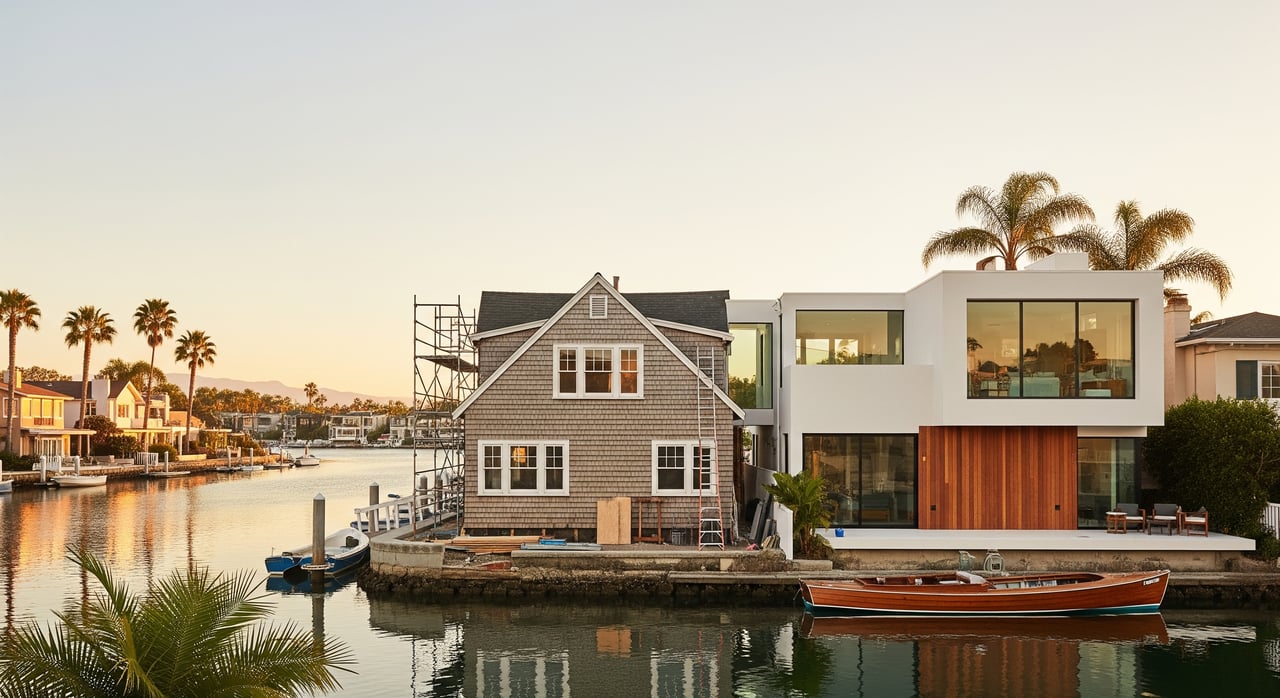
Standing on a narrow Balboa Island lot and wondering if you should freshen up the cottage or start from scratch? You are not alone. Island properties face unique coastal rules, flood considerations, and build constraints that make the fixer versus rebuild choice more complex than a typical inland project. In this guide, you will learn how local permitting, flood and foundation realities, costs, timelines, and market preferences shape the smartest path for your property. Let’s dive in.
Balboa Island rules at a glance
Balboa Island sits within the City of Newport Beach, and most major projects involve the City’s Planning and Building divisions. Because it is in the coastal zone, some work also touches the City’s Local Coastal Program and can involve a coastal development permit. Projects that change massing, height, or shoreline elements often receive more scrutiny, so it pays to plan early.
Zoning controls on lot coverage, setbacks, height, parking, and any overlay districts define your buildable envelope. Small, narrow lots are common, which can limit expansion or upper-story area without variances. Design review and community input may influence exterior design, materials, and neighborhood fit.
Many parcels fall within FEMA Special Flood Hazard Areas. That affects insurance, finished floor elevations, and floodproofing details that might be required under current codes. If your property is near canals or seawalls, shoreline conditions and any needed repairs or permits can add steps to your plan.
Flood and foundation drive the decision
Two items usually guide the choice: flood risk and structural condition. Current flood-zone rules can require elevating occupied floors above base flood elevation, placing mechanicals higher, and using flood-resistant materials. Retrofitting an existing structure to meet these requirements is possible, but raising a home can be complex and costly on small island lots.
Foundations on the island vary, including piles, piers, and older slabs over man-made fill. A geotechnical study and structural inspection help you understand whether the current structure can be safely and economically remodeled. If the foundation or soils require significant work, a rebuild may be more efficient and produce a more resilient home.
Insurance and long-term sea-level planning factor in as well. Rebuilds can be designed to current standards from the outset, which can influence insurability and ongoing premiums. Remodels may limit how fully you can integrate flood-resilient features compared to a ground-up design.
Remodel vs rebuild costs and time
A remodel can be faster and less expensive if the scope is limited and stays mostly inside the existing envelope. Cosmetic and light structural updates often take weeks to a few months. Once you add foundation work, elevation changes, or major exterior alterations, timelines stretch and costs climb.
A tear-down and rebuild typically takes many months to more than a year. Demolition, permitting, and full construction each require careful sequencing. Island logistics like narrow streets, limited staging space, and delivery coordination tend to raise labor and hauling costs compared to inland projects.
Budget planning should include more than just construction. Permit fees, architectural and engineering costs, possible coastal review, temporary housing, insurance, financing, and carrying costs all belong in your comparison. Do side-by-side estimates for both scenarios so you can weigh total cost against the finished home’s likely market value.
Market value on the island
Balboa Island buyers value the setting and lifestyle, but their preferences vary. Some seek preserved cottage character, while others want turnkey modern coastal living. New construction often commands a premium when it fits neighborhood scale and design cues.
Study comparable sales of renovated cottages and recent new builds on the island and nearby waterfront areas. You want to understand the likely price premium a rebuild could achieve on your street. Also factor in carrying costs during construction since those can reduce short-term return.
Overbuilding rarely pays. A thoughtful design that respects the block’s rhythm and integrates resilient coastal features is more marketable. The goal is to match the finished product to what buyers in your segment are actively choosing.
Decision framework checklist
Use this step-by-step process to bring clarity to your choice.
Pre-decision information
- Pull the deed, any recorded easements, and a current title report.
- Confirm your parcel’s zoning, setbacks, height limit, and any overlay rules with the City of Newport Beach.
- Review recent island comps for both renovated homes and new construction.
- Check FEMA flood maps and secure an elevation certificate. Review sea-level-rise guidance for long-term planning.
- Order a geotechnical report and a structural inspection focused on the foundation and framing.
- Get a boundary and topographic survey.
- Verify whether design review, neighborhood rules, or historic considerations apply.
Feasibility and pricing
- Meet an architect with Newport Beach and coastal permitting experience for a feasibility sketch that shows your buildable envelope.
- Get at least three contractor estimates for two paths: major remodel with flood mitigation and a tear-down with new build to a defined program.
- Ask your architect or an expeditor for a preliminary permitting strategy and timeline, including coastal-related approvals if relevant.
- Consult your insurance provider on flood insurance costs for both scenarios.
- Speak with a lender who understands coastal construction financing if you plan to use a construction loan.
Decision criteria
- Technical feasibility: foundation integrity, soil conditions, and required elevation work.
- Total cost: include soft costs, permits, staging, insurance, and financing.
- Timeline tolerance: how long you can carry the property before move-in or sale.
- Regulatory risk: likelihood of permit delays or coastal appeals.
- Market fit: the degree to which the finished home matches buyer expectations and neighborhood scale.
- Long-term resilience: flood risk, sea-level rise, and shoreline maintenance.
When a remodel wins
Choose a remodel when the structure is sound and the upgrades you want fit within the existing envelope. If elevation changes are minor and the foundation checks out, you can update systems, finishes, kitchens, and baths without touching every structural element. A remodel also makes sense when you want to preserve island cottage character or when you need a shorter timeline.
If your goal is primarily aesthetic with modest layout tweaks, a targeted remodel can deliver strong value. In these cases, you avoid the longer entitlement path and heavier staging logistics. You also reduce the disruption to neighbors and the risk of extended appeals.
When a rebuild pays off
A rebuild becomes compelling when foundation issues, flood-zone requirements, or major layout changes would push remodel costs near a full new build. Starting over lets you design to current flood and energy codes, optimize ceiling heights and window placement, and right-size mechanical systems. You can also aim to maximize allowed floor area within zoning and height limits.
If your lot is close to seawalls or canals, a rebuild may allow you to address shoreline interfaces and utility connections in a coordinated way. Modern construction can reduce long-term maintenance and help with insurability. For resale, a well-executed new coastal home that respects neighborhood scale can attract a wider buyer pool.
Permits and construction essentials
Expect multiple approvals for larger projects. A pre-application meeting with City planning can clarify Local Coastal Program requirements and help you avoid incomplete submittals. If your project touches shoreline structures or significantly alters massing, allow extra time for review.
Construction on the island demands careful staging. Narrow streets and limited laydown space call for precise delivery schedules and experienced crews. A neighbor communication plan helps minimize friction during demolition and heavy construction.
Early coordination on any seawall or bulkhead considerations is wise. Some shoreline work can require separate permits and specific seasonal windows for marine contractors. Building this into your schedule avoids costly delays.
Financing and insurance angles
If you plan to finance, understand that construction loans differ from standard mortgages. Lenders will want reliable cost estimates and, in flood zones, elevation data. Timelines and draw schedules can affect your carrying costs during the build.
Flood insurance requirements can change with your design. A rebuilt home that meets current elevation and flood-resilient standards may influence projected premiums. Check these variables with your insurer as part of the remodel versus rebuild math.
If you are weighing complex financing options or want to ensure a smooth path from estimate to closing, bringing a real estate advisor with mortgage fluency into the conversation early can reduce risk. Clear planning on insurance and lending supports a more predictable timeline.
Your next step on Balboa Island
You do not need to make this decision in the dark. Start with the checklist above, gather your reports, and sketch both scenarios with a local architect. With the right data, the better path tends to reveal itself quickly.
If you want a seasoned, boutique-level partner to help you weigh value, manage the permitting conversation, and map the financing from day one, reach out to Kyle Shutts. I pair white-glove listing and buyer representation with hands-on mortgage experience so you can move forward with clarity.
FAQs
Do Balboa Island rebuilds need a coastal permit?
- Many do. Projects within the coastal zone can require review under the City’s Local Coastal Program, and larger exterior or shoreline changes increase the likelihood of a coastal development permit.
How do flood zones affect remodels and rebuilds on the island?
- FEMA Special Flood Hazard Areas can require elevating finished floors, raising utilities, and using flood-resistant construction, which may push a project toward rebuild if upgrades become extensive.
What is the typical timeline difference for remodel vs rebuild here?
- Minor remodels can be completed in weeks to a few months, while major remodels or full rebuilds commonly take many months to 18 or more months depending on permitting and logistics.
Will rebuilding change my property taxes in Newport Beach?
- Yes. A rebuild generally increases assessed value, and you should review Orange County Assessor guidance to understand reassessment and potential tax implications.
What professionals should I hire first for a Balboa Island project?
- Start with an architect experienced in Newport Beach and coastal work, then add a structural engineer, a geotechnical consultant, and contractors with local coastal construction experience.
How do seawalls or canal frontage affect the decision to rebuild?
- Shoreline conditions can trigger separate permits and coordination, and addressing them during a rebuild may be more efficient than retrofitting during a remodel.