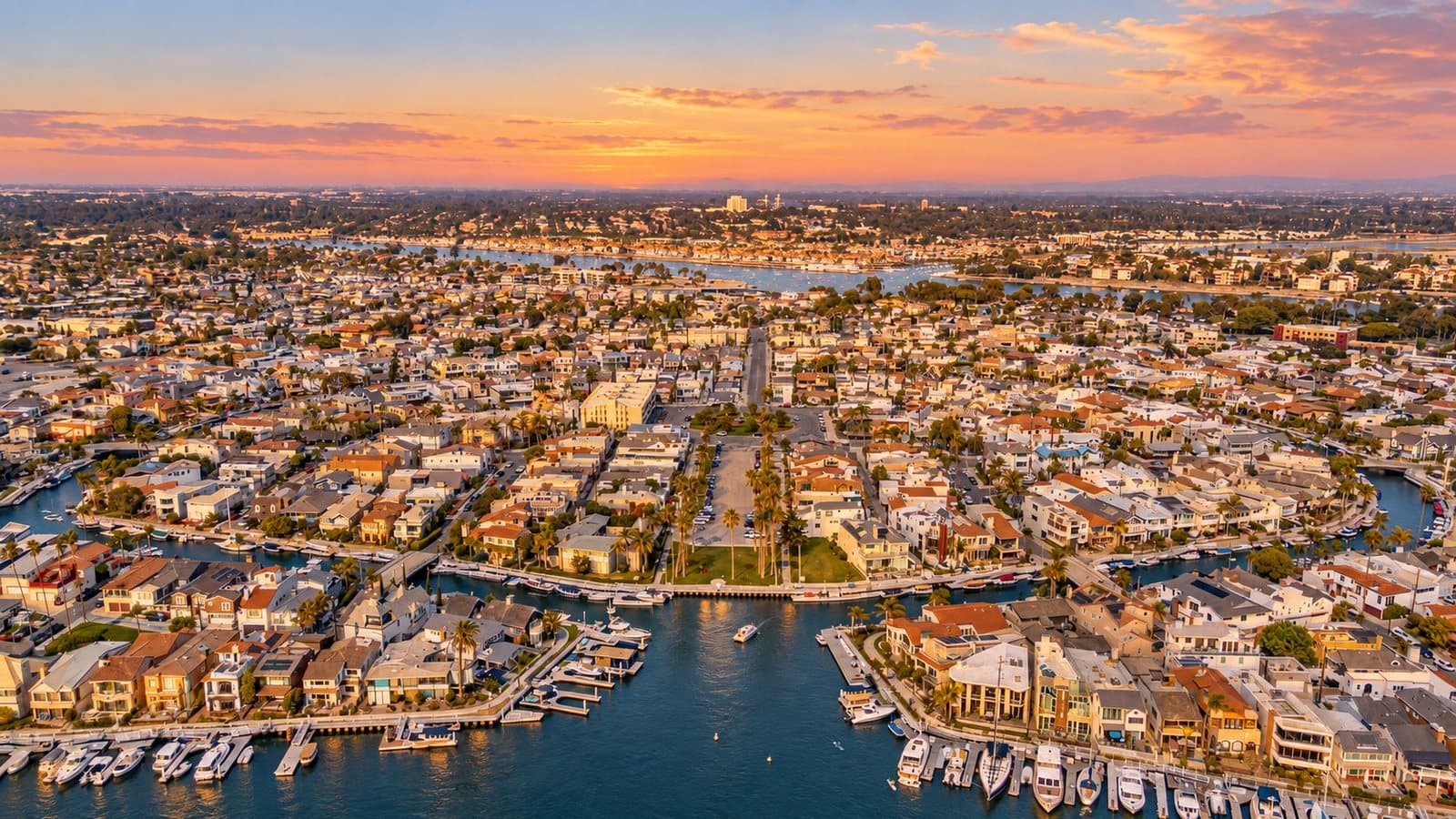
Pull up the numbers on El Dorado Park Estates right now and you'll see a market that looks like it's cooling. Over the three months ending May 2026, the median sale price sat at $1.3 million, down 6.3 percent from the same period a year earlier. Price per square foot came in at $532, down 7.8 percent year over year. Homes that used to move in 27 days were taking 40. Fewer of them sold at all, just 9 in May compared to 10 the year before.
If you're comparing neighborhoods and this is the number you're anchoring to, you'd be forgiven for crossing El Dorado Park Estates off your list, or waiting for prices to fall further before you look seriously. Here's the problem with that read. In the same window this data covers, a three-bedroom, 1,704-square-foot home in the neighborhood hit the market at $1,350,000, which works out to $792 a square foot. That's not a typo and it's not an outlier from six months ago. It's a listing from the first week of August 2026, priced at nearly 50 percent above the neighborhood's own median price per square foot, in a market the headline says is softening.
Both numbers are real. They're describing two different products wearing the same zip code.
What the Median Is Actually Averaging
El Dorado Park Estates was built almost entirely at once. S&S Construction laid out roughly 300 acres of tract housing in the early 1960s, and the homes that resulted came off a handful of standard floor plans, model numbers like 101, 105, 201, 202, and a tri-level 204, ranging from around 1,400 to nearly 2,900 square feet depending on which model and level you got. Homes built north of Wardlow Road tend to be the earlier, smaller ones in that range. South of Wardlow skews newer and larger, with many pushing close to 3,000 square feet.
Sixty-plus years later, that original tract is not one housing stock anymore. Some owners never touched their homes beyond routine upkeep. Others expanded kitchens, converted garages into living space, added family rooms, or gutted and rebuilt from the studs out. A three-bedroom pool home on East Ring Street, for example, recently came to market with its garage drywalled and converted into finished living space, complete with a dropped ceiling and ladder access for overhead storage, an upgrade no owner working from the original 1960s floor plan ever had. A renovated Model 101 on Berner Street, positioned south of Wardlow, went through a full top-to-bottom remodel with new flooring, quartz counters, and a dedicated workstation before it hit the market.
When you average the sale price of an untouched 1960s ranch against a fully expanded, permit-finaled remodel of the same square footage, you get a median. What you don't get is a picture of either home.
The Math That Explains the Contradiction
Here's where the two numbers stop contradicting each other and start making sense together. If original, unrenovated homes are taking longer to sell in 2026, buyers walking through them are comparing them not to the year they were built but to the fully renovated comp two streets over, and pricing their offers accordingly. That pulls the neighborhood's average days on market up and its median price per square foot down, even while the renovated tier of the same tract keeps closing quickly at numbers the median doesn't come close to reflecting.
This isn't a guess dressed up as a trend. It's the only explanation that fits both facts on the table at the same time: a softening headline number, and a specific, dated, currently active listing pricing 49 percent above that number's own per-square-foot figure. A neighborhood genuinely losing value across the board doesn't also produce a listing like that in the same reporting window. A neighborhood sorting itself into two tiers produces exactly this pattern.
What This Looks Like on the Ground
- Original condition | 1960s S&S floor plan, minimal updates | Measured against move-in-ready comps nearby | Lot size, location relative to Wardlow Road
- Expanded or renovated | Same footprint, garage conversion, kitchen expansion, or full remodel | Priced against other finished, updated inventory | Quality and permit status of the work already done
The takeaway for a buyer isn't that El Dorado Park Estates is cheap right now, and it isn't that it's expensive. It's that the median price you see on a portal search is not the price of the house you're touring. You have to ask which side of that split the specific listing sits on before the number means anything.
For a seller, the same logic points somewhere useful. If your home is still in largely original condition, the neighborhood's softening average days on market should be read as a signal about how buyers are pricing untouched inventory against the renovated comps around it, not as a reason to panic on price. A kitchen expansion or garage conversion that brings a home's function in line with what the renovated tier is offering appears, based on what's closing this year, to be the difference between competing in the segment that's taking 40 days and competing in the segment that priced at $792 a square foot in the same month.
Reading the Neighborhood Correctly Before You Compare It to Anything Else
If you're cross-shopping El Dorado Park Estates against other East Long Beach neighborhoods, the median is a starting point, not a conclusion. Ask for the permit history on any home you're seriously considering. Ask whether a kitchen or garage conversion was finaled by the city, since that distinction shows up in how buyers value the work later, not just in how it looks today. And when you see a listing price that looks out of step with the neighborhood average in either direction, assume there's a reason rooted in the home's specific renovation history before you assume the market moved.
That's the actual work of comparing neighborhoods with real numbers instead of headlines. The city of Long Beach permit and record data for any specific address is public and worth pulling before you write an offer or set a list price, since it will tell you more about where a given home sits in this split than any median ever will.
FAQ
Is El Dorado Park Estates a buyer's market right now?
The aggregate numbers, a falling median and longer days on market, suggest softening, but they average two different segments together. Original-condition homes may be facing more buyer resistance and longer timelines. Expanded or fully renovated homes in the same tract are still commanding premiums and, based on recent listing activity, moving without the same drag.
Does a garage conversion or kitchen expansion actually pay off here?
Based on what's currently listing and selling in the neighborhood, homes with finished expansions are pricing well above the tract's median per-square-foot figure. That doesn't guarantee a dollar-for-dollar return on any specific renovation, but it does show that buyers are actively paying a premium for that finished, expanded product over original floor plans of the same era.
Why does it matter whether a home is north or south of Wardlow Road?
Homes built south of Wardlow Road tend to be newer within the tract's original construction window and larger, often approaching 3,000 square feet, while homes north of Wardlow are typically the earlier, smaller builds in the 1,400 to 2,300 square foot range. That's a separate variable from renovation status, and a home can be original condition or fully updated on either side of the road.
← Back to the Blog